Posts

Showing posts with the label space advocacy

Rebirth Of The Spaceship
Image
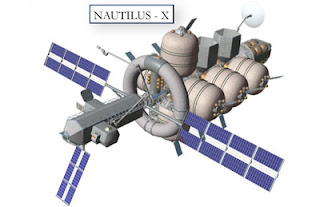
Over the last year the space advocate community has splintered into two major groups in answering the question "where should we go next?" Moon First or Mars First . This division was present in the Review of Human Spaceflight (aka Augustine) committee's final report in late 2009, with the surprising conclusion that there isn't the funds for either, suggesting a number of intermediate destinations first - including asteroids. However, as few people consider asteroids to be truly interesting destinations for the human utilization of space ( except me! ), the debate rages on. Many Moon First advocates are "Mars Next" advocates while most Mars First advocates are "Moon Again?" detractors. The former claim that Mars exploration will benefit from lunar exploration, particularly in experience and risk reduction, and perhaps the procurement of propellant. The latter claim that lunar exploration is just a distraction and want to avoid the risk of be...

You've gotta love him

Image
For anyone who wonders why I still love Bob Zubrin, watch this video: It's the passion. For anyone who needs a horrific demonstration of closed world thinking, combined with a little intellectual elitism, read on .

Please Stop Lying To Children

Image
Here in Australia we have a shameless tradition of claiming celebrities who are not quite Australian. The best example of this is probably Mel Gibson - back when anyone wanted to claim him - who wasn't actually born in Australia, he just lived here for a portion of his childhood. It is generally agreed that anyone who was born in New Zealand can never be considered an Australian ( just kidding kiwis, we love you ) but if they're famous they're automatically Australian. The common joke is that any celebrity who so much as flies over Australia will be offered citizenship. Something like the Australian celebrity phenomena happens when people start talking about NASA spinoffs, here's how it works: a speaker creates the implication that civil servant NASA scientists developed some new technology which was subsequently "spun off" to form a commercial product. The most common example of this is Velcro, but there are plenty of others. Whenever you dig into thes...

Space Colonization As The Savior Of Progress

The idea of Progress, as defined by J. B. Bury , proclaims that "civilization has moved, is moving, and will move in a desirable direction". Ever since the 1960s the belief in Progress has been waning and some would say that it has been completely lost to the current generation. Going beyond Bury's definition, Taylor E. Dark III provides three mutually reinforcing and interlocking premises : 1. NO LIMITS. There are no fundamental limits – nor should there be – on the collective human capacity to grow, no matter how growth is defined (which may be in terms of knowledge, wealth, power, population, or morality). Progress is endless (or at least indefinite for all practical purposes). 2. ALL GOOD THINGS GO TOGETHER. Advancements in science and technology, and the resulting mastery over nature, expand our knowledge, wealth, and power, and, in so doing, bring improvements in the moral, political, and spiritual character of the human race. The elements of progress ar...

How The Politicians Think

If you have one of these, turn it off now It's almost funny whenever a member of Congress opens their mouth and says something about NASA. Thankfully I don't pull my hair out or I'd be bald by now, it's just that funny. Here's a quick list of things I have to remember to make sense of US space policy. "Heavy Lift" means super heavy lift . Whenever a politician says "heavy lift", or just about anyone talking about space policy, they mean a vehicle that can lift more than 50 tons to LEO. Actually, they almost always mean a Saturn class vehicle.. and in many cases they actually just mean the Saturn V. When someone who actually works in the space industry says "heavy lift" they mean heavy lift - a vehicle that can lift more than 20 tons to LEO but less than 50 tons. And they almost always are talking about actual vehicles that you can place an order for right now. The workforce is precious , and capable and vital, except for when ...

Mars Direct Without Super Heavy Lift

Image
For a decade or two now the proponents of Bob Zubrin's Mars Direct have been bemoaning the lack of super heavy lift (any vehicle that can lift more than 50 ton to LEO). While few advocates claim a heavy lift launch vehicle is the only component of the Mars Direct plan which is missing, most consider it a necessary prerequisite. Before I tell you why I think that's simply wrong, let's just make a quick list of all the other things we still need: decent life support, space suits for Mars, rovers that run on methane/LOX, the ISRU propellant production system, bigger entry/descent/landing systems than have ever been flown, portable field equipment for the science mission, artificial gravity generation, and the habitat itself. Oh yeah, and a space rated nuclear reactor. The beautiful innovation of the Mars Direct plan was the use of the Mars atmosphere to produce the return propellant so it doesn't need to be carried all the way from Earth. Without this simple idea t...

My 2010 Review

I started this year thinking the Augustine committee had nailed the Moon shut. Considering that I was a proponent of Constellation before the Augustine committee, that's pretty significant. If I go back to that time and see what I was saying to people, most of it was explaining the flexible path as an alternative to sitting on the ground waiting for a booster and a capsule and a lander to be developed by NASA. I end this year thinking that the Moon isn't nailed shut. SpaceX has demonstrated that making a capsule and booster need not be expensive. Armadillo Aerospace and the other contractor's work on Project M (now Project Morpheus) demonstrated to me that going to the Moon need not be expensive. Tim Pickens and the Rocket City Space Pioneers have successfully restored my faith that the Google Lunar X-Prize will be won. Paul Spudis has actually become a robotic exploration advocate! In a few years time it won't be absurd to suggest that a commercial effort could ...

Soonest Space Solar Power

Image
Space Solar Power has a bad rap, caused predominately by advocates who can't separate the exciting long term vision from the short term facts. In his recent paper , Al Globus has tried to rectify this by investigating what can be done with demonstrated launch vehicles, solar collectors and power beaming (and without on-orbit assembly, manned outposts, lunar materials, etc). His conclusion is that it appears space solar power is now ready for niche markets, such as forward military bases, where the price of power can be as much as $1/kWh. The low cost launch vehicle of choice is, of course, SpaceX's Falcon 9. High specific power solar collection is achieved using thin-film heliogyros as demonstrated by the Japanese Ikaros satellite. The power beaming technology is infrared laser with custom solar panel receivers, as demonstrated by LaserMotive in their win at the Space Elevator Games last year. A minor improvement in Globus' architecture is apparent. The mass of ...

I Guess "It's Not Junk" Is Just Too Visionary

Last week I attended a different kind of space conference. It was populated with very intelligent people who are active in doing "real" space, working payloads to get them accepted to fly on government vehicles - often up to the International Space Station - or as free flying satellites. I recorded 17 videos of the event, which I found enthralling, but I'm weird like that. The best talk (in my opinion) was given by Dr Alice Gorman of Flinders University (Australia) about achieving an international agreement on Space Heritage . The presentation was aimed at preserving historic sites related to human spaceflight so that future generations have some physical connection with the past. This is something we do well in Australia, with "heritage listing" enforced by law. Of course, there's not that many sites that one might consider space heritage in Australia, a few radio telescopes that were used during Apollo - one that has already been heritage listed - ...

Dr Paul Spudis Responds - Sorta

I thank Dr Paul Spudis for responding. His post isn't addressed to me but it certainly appears to be directed at me. Clearly if we don’t go to the Moon with people or machines, there is no way to use the abundant water, metals, and other lunar surface materials to create new capabilities in space. Supporters of the new path suggest instead that we can obtain all the materials we want from near-Earth asteroids .. in my dreams! Us asteroid mining advocates are a minority who have been swept aside in this debate. Asteroids are a "stepping stone" to Mars, not a destination. As Clark puts it: As pointed out many times here, the main impetus for the Flexible Path option was simply to have useful and interesting in-space missions underway while landing and surface systems for Moon and/or Mars were in development. Spudis also makes good points about the difficulty of extracting resources from asteroids. This is often cited as justification for human missions. What ...

Book Of The Week: Kim Stanley Robinson's Mars Trilogy

Image
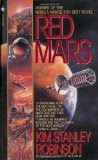
The Book Of The Week this week is Kim Stanley Robinson's "Red Mars", "Green Mars", "Blue Mars". This is often referred to as the Mars Trilogy, but none of these books are about Mars. There's plenty of awesome scientifically accurate detail in these books on Mars geology, the moons of Mars, Mars colonization, Mars terraforming, and even some interesting speculation about Mars native life and building a space elevator on Mars. The books are certainly set on Mars but that's as far as it goes. In my opinion, these books are as much about Mars as Hamlet is about Denmark. These books are about politics, the real kind, and what happens when it devolves into war. The books start with group dynamics, petty infighting, the formation of camps and the inevitable fracturing of community. The lines are: those who want to terraform Mars and those who want to keep Mars red. But the battle lines don't really matter, what was shocking was how qui...

My Reason For Human Lunar Return

Why go back to the Moon? I've asked that question a lot , and I've gotten a variety of answers. There's a lot of nice resources on the Moon and the energy requirements to lift them from the Moon is a lot less than required to lift them from the Earth. There's water, which can be used for propellant, and there's metals, both in the lunar regolith and in more significant deposits from asteroid impacts.. but I disagree that we need humans to retrieve those resources. The Apollo program only scratched the surface (literally) on lunar science. There's a whole lot of mysteries that lunar geologists don't have good answers for: nonmare domes, rilles, potentially active volcanic vents, the entire far side, and permanently shadowed craters.. but I again disagree that we need humans to do that science, and if NASA was at all serious about it they would have sent at least one rover to the Moon ever . I have advocated the viewpoint that what should motivate...

"Access To Space"

Andre Bormanis has an article over at The Space Review which includes this nugget: The US frequently partners with other countries and international organizations on space missions, primarily in the field of robotic exploration. Partnering in the development of manned systems has been resisted because of a belief, held deeply by many in government and among the public, that the US needs to have independent human access to space to maintain its status as a world power. If the Russians and Chinese can send people into orbit, so the reasoning goes, the US must as well, or risk being perceived as a declining power on the world stage. Oh, is that what "access to space" means? Well, as someone who is outside the US, I feel I can safely say: no-one cares . Yes, "soft power" exists, but no-one knows the names of astronauts anymore - they're just government employees who go up to an incomprehensible space station to pretend they're doing Important Work that ...

How Near Are The Near-Earth Asteroids?

Image
Back in 1978, following three successful free flights of Space Shuttle Enterprise the year before and the first lift-off of Space Shuttle Columbia only 3 years away, planetary scientist Gene Shoemaker and astronomer Eleanor Helin collaborated on a paper which presented the then shocking conclusion that some near-earth asteroids required less delta-v to reach than Mars. The near-term availability of the Space Shuttle was key, as the high flight-rate it promised meant a manned mission to an asteroid could be staged in low Earth orbit for as little as 23 flights. At the time, it wasn't unreasonable to suggest that within a few years that would be as little as 6 months of staging, and the vehicle would be reusable! Of course, the Shuttle's flight rate never got that high, and today's mission designs to Mars are measured in International Space Station masses to remind us of how long it takes to amass payload in orbit. This paper, however, remains important for the math i...

The Future Mines Of Humanity

Image
Dr Phil Harris is a Moon First space advocate and a published and acclaimed author. In his book Space Enterprise: Living and Working Offworld in the 21st Century , he goes into exquisite detail of the challenges and the bounties of industrializing the lunar surface. In early January of this year Harris authored a special White House strategy paper [redistributed with permission] which recommended a pushing forward on the Vision For Space Exploration, or at least the Moon focused vision that came out of it. He makes it very clear that the reason to go back to the Moon is to get resources and reduce the national debt. Now is the time to enlighten our nation's citizens of the vast resources to be tapped on the Moon. We could not only mine the lunar surface for valuable minerals and gems, but we could use its water and regolith to support lunar industrialization and settlement! Those last two words are the only mention of settlement in the entire paper - so this is an economi...

Desperately Seeking: Moon First Advocate

Image
As it seems Paul Spudis isn't going to respond I am left without a sparring partner. Anyone who wants to pick up the gloves and make the case for returning to the Moon, come at it. The ground rules are simple: you must make an argument as to why we should return to the Moon first . It would also be good if you could explain how NASA can do it within a time frame that can be sold politically and within the current budget profile, but I'll settle for a why that makes sense. Note that if you just preach the dogma of someone else, you're unlikely to be able to defend it, so, please, only apply if you've got the stones.

Dr Paul Spudis Continues To Baffle Me

No-one ever accused me of being subtle. I'm happy to clearly state my opinion and support it with what, I hope, is persuasive argument. As a result, subtle people tend to confuse me. That's right, along with all the other things I have accused Paul Spudis of over the last year, I'm now accusing him of being subtle: painfully subtle. Over at Spudis's blog he rants and raves over the definition of "misconception" and manages to fit in a plug for what I guess is his position.. The purpose of lunar return under the VSE is not to collect rocks or relive past space glories. Simply put, because we can't take everything with us, humans must learn to use what we find in space to create new space faring capabilities, starting on the Moon. And our goals are not simply Mars, but everywhere – wherever human presence is needed or desired. Using the resources of the Moon (specifically, making consumables and propellant from lunar materials) enables routine acce...

Living Inside An Asteroid

Image
Deriders of the new NASA direction have latched on to the announced human asteroid mission in the 2025 timeframe as something they "can't imagine" and therefore is not worth doing. Of course, the administration is talking up the "science" that can be done on an asteroid, and how this could better inform us should the need arise to divert or destroy one that threatens Earth. This is good politics as nothing motivates like fear, but for those of us who think the human spaceflight program is really about preparing us to live at the future homes of humanity, asteroids would seem to be just a stop on the way - I disagree. As I've written previously, the new NASA direction isn't about asteroids - it isn't about destinations - it's about going and specifically, it's about going to Mars. I'm not sure NASA knows yet why they're going to Mars, but they're focusing on the technology to get there and get back safely, and some of the ...

The Completely False Choice

During an interview on The Space Show Jeff Greason described the Flexible Path as a pragmatic approach to human space exploration when considering NASA's limited budget. Towards the end he says: The question is not "do we or don't we go to the Moon", that's a completely false choice. The question is do we structure the program, for the same money, in a way in which - in addition to going back to the Moon - we get asteroids, Lagrange points, maybe a Mars flyby, and we build up deep space experience that we're going to need for Mars, instead of waiting 20 years and hoping that the public's enthusiasm can be sustained. The message here is that the Moon and Mars both require landers and it's hard enough just trying to get there with a limited budget. So, assuming NASA isn't going to get double as much money, it needs to find a way to do with what it's got. This is a fiscal reality. Those who say "Constellation can be fixed" or ...

There's No Business Like Show Business

Image
That is NASA's attempt at public outreach.. and I've yet to see a single newspaper link to it or report it. If you watch it, you can see why. Whenever Lori Garver or Rob Braun is about to explain what the program is about they get cut off. It's all so glossy and vague.. most the time I think they juxtapose the wrong images with the words.. like "we plan nothing less than to create the future of spaceflight, now" cut to a shot of the Shuttle liftoff.. wtf? "After the safe and planned retirement of the space shuttle fleet.." ohhhh, is that what that shot is for? Wow, someone failed film school. Then they gotta say some stuff about the ISS and how great it is and fuels the international cooperation and blah blah blah. And while you're being bored by justifications for the ISS program they slip in "we're trying to make this more commercial" and private companies. Yawn, sorry, I fell asleep there, did you say NASA will focus on...